
Managing a grocery store efficiently requires balancing multiple operations inventory tracking, sales, billing, and customer management. Traditionally, many small and medium grocery stores relied on manual billing systems, which involve handwritten invoices, ledger tracking, and paper-based inventory management. While this approach has worked for decades, it is increasingly prone to errors, inefficiencies, and slow service, especially as stores grow in size and customer base.
On the other hand, modern grocery POS software offers a digital solution to streamline these processes. By automating billing, tracking inventory in real time, and generating analytics, this software reduces errors, saves time, and enhances the overall customer experience. In this article, we compare grocery POS software with manual billing, highlighting the advantages, challenges, and practical considerations for grocery store owners seeking efficient and reliable solutions.
Understanding Grocery POS Software
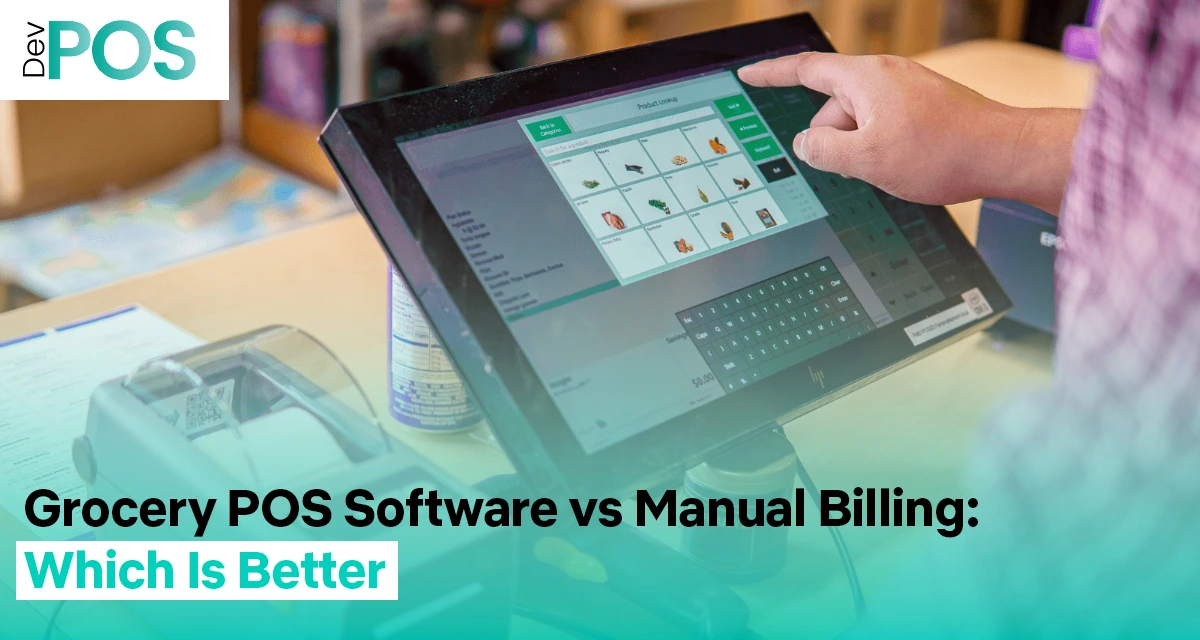
Grocery POS software is a specialized digital platform designed to help grocery stores manage sales, inventory, and customer interactions efficiently. Unlike manual billing, where staff must record every sale on paper or spreadsheets, POS software automates transaction processing, calculates totals, and updates stock levels in real time.
Modern systems often include additional features such as loyalty programs, discounts, supplier management, and sales analytics. Many grocery POS platforms are cloud-based, allowing store owners to monitor operations remotely and access sales reports anytime. This level of automation not only reduces human error but also provides insights into product performance, peak hours, and customer behavior, helping businesses make informed decisions for growth.
For smaller stores or new businesses, there are even grocery store software free options available, allowing owners to test digital billing solutions without a heavy upfront investment. These tools provide basic functionalities such as billing, inventory tracking, and sales reporting, making them ideal for stores transitioning from manual systems.
What Is Manual Billing?
Manual billing refers to the traditional process of generating invoices, tracking sales, and maintaining records by hand. Typically, cashiers use printed bill books or handwritten receipts while inventory is updated in physical ledgers or spreadsheets.
While simple and cost-effective in small-scale operations, manual billing has several limitations:
- Time-Consuming: Preparing bills, calculating totals, and maintaining records manually takes significant time.
- Error-Prone: Human errors in calculations or record-keeping can lead to discrepancies in inventory or finances.
- Limited Insights: Manual records rarely provide real-time data or detailed analytics for decision-making.
- Inefficient Scaling: As store size and customer volume increase, manual systems struggle to handle higher transaction loads efficiently.
Despite these drawbacks, some small grocery stores still rely on manual billing due to low initial costs, familiarity, or lack of technical knowledge. However, as competition and customer expectations rise, the efficiency gap between manual and digital systems becomes increasingly apparent.
Key Features of Grocery POS Software
Investing in grocery POS software brings a wide range of capabilities that manual billing simply cannot match.
1. Automated Billing and Checkout
Transactions are processed digitally, reducing human errors and speeding up checkout times. With barcode scanning and instant total calculation, grocery POS software ensures accurate billing while allowing cashiers to serve more customers in less time.
2. Inventory Management
A POS system automatically updates stock levels after every sale. Low-stock alerts and reorder suggestions prevent stockouts and overstocking, helping store owners maintain optimal inventory without manual tracking.
3. Sales Analytics
Digital platforms generate real-time reports, showing best-selling products, peak shopping hours, and revenue trends. These insights enable better decision-making, such as which items to promote or which suppliers to prioritize.
4. Customer Relationship Management
Many POS solutions include loyalty programs, discount management, and purchase history tracking. By analyzing customer data, store owners can tailor promotions, improve engagement, and increase repeat business.
5. Integration Capabilities
Modern grocery POS software often integrates with e-commerce platforms, accounting software, and payment gateways. This allows seamless operations across multiple sales channels and reduces the need for duplicate data entry.
In Pakistan, small stores increasingly use POS Pakistan solutions to streamline operations and remain competitive, especially in areas where online delivery and digital payments are becoming popular.
Benefits of Grocery POS Software Over Manual Billing
Transitioning to grocery POS software provides clear advantages over manual billing systems:
Increased Efficiency
Automated transaction processing and inventory management reduce time spent on manual tasks. Staff can focus more on customer service and business development rather than tedious record-keeping.
Reduced Errors
Human errors in calculations, stock management, or reporting are virtually eliminated. Digital records ensure accuracy in billing, inventory, and financial reporting, preventing costly mistakes.
Improved Customer Experience
Faster checkouts, accurate billing, and personalized offers enhance the shopping experience. Customers are more likely to return to stores that provide smooth and professional service.
Real-Time Insights
POS software provides instant access to sales and inventory data. Real-time insights help store owners make informed decisions on promotions, stock replenishment, and supplier management.
Scalability
As a store grows, grocery POS software can handle increased transaction volumes, multiple outlets, and integration with online sales channels without disrupting operations. Manual billing, in contrast, becomes increasingly inefficient as business scales.
Cost-Effectiveness Over Time
Although digital systems require an upfront investment, the long-term savings from reduced errors, labor efficiency, and optimized inventory often outweigh initial costs.
Challenges of Manual Billing
While manual billing may seem simple and inexpensive initially, it presents several operational challenges:
- Slower Service: Each transaction requires manual calculation, leading to longer wait times for customers.
- Inventory Inaccuracy: Stock levels may not reflect real-time sales, increasing the risk of stockouts or overstocking.
- Limited Reporting: Generating reports for analysis is time-consuming and often prone to errors.
- Difficulty in Scaling: Manual systems are not designed to handle increased sales volume or multiple store locations.
- Financial Discrepancies: Errors in record-keeping can affect cash flow management and financial planning.
Over time, these challenges can hinder growth, reduce profitability, and negatively impact customer satisfaction.
How Grocery POS Software Supports Better Decision-Making
One of the strongest advantages of digital POS systems is the data-driven approach they offer.
- Product Insights: Identify which items are selling fastest and which are lagging, allowing strategic decisions on stock replenishment and promotions.
- Revenue Analysis: Detailed sales reports highlight profitable products and trends, helping store owners optimize pricing and marketing strategies.
- Customer Preferences: Track purchase behavior to tailor loyalty programs, discounts, and personalized promotions.
- Supplier Management: Automated tracking of inventory and orders ensures timely procurement and avoids supply chain disruptions.
- Operational Efficiency: Real-time dashboards allow managers to monitor staff performance, peak hours, and checkout efficiency, ensuring smooth store operations.
These actionable insights are nearly impossible to achieve through manual billing, making digital POS software a strategic asset for grocery store management.
Choosing the Right System for Your Store
When deciding between grocery POS software and manual billing, consider the following factors:
1. Business Size and Growth Plans
Small stores with low transaction volume may initially manage with manual billing, but growing businesses will benefit from digital solutions that scale efficiently.
2. Budget
While digital POS systems require an upfront investment, the long-term return on efficiency, accuracy, and customer satisfaction is significant. Free or entry-level grocery store software free solutions are available for stores testing the transition.
3. Feature Requirements
Assess your store’s operational needs. Features like inventory tracking, analytics, multi-channel integration, and loyalty programs add value beyond basic billing.
4. Ease of Use
An intuitive interface ensures staff can adopt the system quickly without extensive training.
5. Support and Reliability
Reliable technical support is essential to address issues promptly and minimize disruptions in daily operations.
Real-World Examples
Small grocery stores around the world have benefited from POS adoption. For instance, a local grocery shop in Karachi reduced checkout time by 50% after implementing a digital POS system. Inventory discrepancies dropped significantly, and the store could analyze sales patterns to optimize stock purchases and promotions.
Another example in Lahore involved a chain of small outlets integrating cloud-based grocery POS software. This allowed the management to monitor multiple stores remotely, streamline supply orders, and implement uniform pricing and promotions across outlets, something manual systems could never achieve efficiently.
These cases demonstrate how modern technology transforms store management, improves profitability, and enhances customer experience.
The Future of Grocery Billing
As technology evolves, grocery POS software continues to advance with features such as AI-powered analytics, predictive inventory management, and mobile integration. Cloud-based solutions and app-driven interfaces allow owners to manage operations from anywhere, while automated analytics support better business strategy and marketing decisions.
With increasing adoption of digital payments, e-commerce, and online grocery shopping, relying on manual billing becomes less feasible. Stores adopting modern digital solutions can remain competitive, scale efficiently, and provide superior service to meet modern consumer expectations.
Key Takeaways
The comparison between grocery POS software and manual billing clearly favors digital solutions for small to medium grocery stores. While manual systems may work for very small or low-traffic stores, the efficiency, accuracy, scalability, and insights offered by POS software make it a superior choice in today’s competitive retail landscape.
By adopting grocery POS software, store owners can improve operations, reduce errors, enhance customer satisfaction, and make data-driven decisions that support long-term growth. Investing in modern technology is no longer optional but essential for grocery stores seeking sustainability, efficiency, and profitability.
FAQ
1. How can small grocery stores manage sales more efficiently?
Using digital platforms to record transactions and update stock in real time helps streamline sales processes and reduces manual workload.
2. What strategies improve inventory accuracy?
Automated tracking systems allow store managers to monitor stock levels, detect shortages early, and prevent overstocking without relying on paper records.
3. How can stores retain loyal customers?
Collecting purchase data enables personalized offers and reward programs, encouraging repeat business and customer satisfaction.
4. Can multiple outlets be managed simultaneously?
Centralized digital solutions allow store owners to oversee inventory, sales, and promotions across multiple locations from a single dashboard.
5. What insights can digital systems provide for better decisions?
Analytics on sales trends, product performance, and customer behavior allow informed decision-making on pricing, promotions, and stock management.